

Attending the Employer Branding Conference is an investment of time and budget, and the return depends less on the agenda than on how it is prepared. This employer branding conference attendee guide sets out five steps – before, during and after the event – to help HR and talent acquisition professionals leave with concrete, applicable insights rather than a folder of notes that never gets reopened.
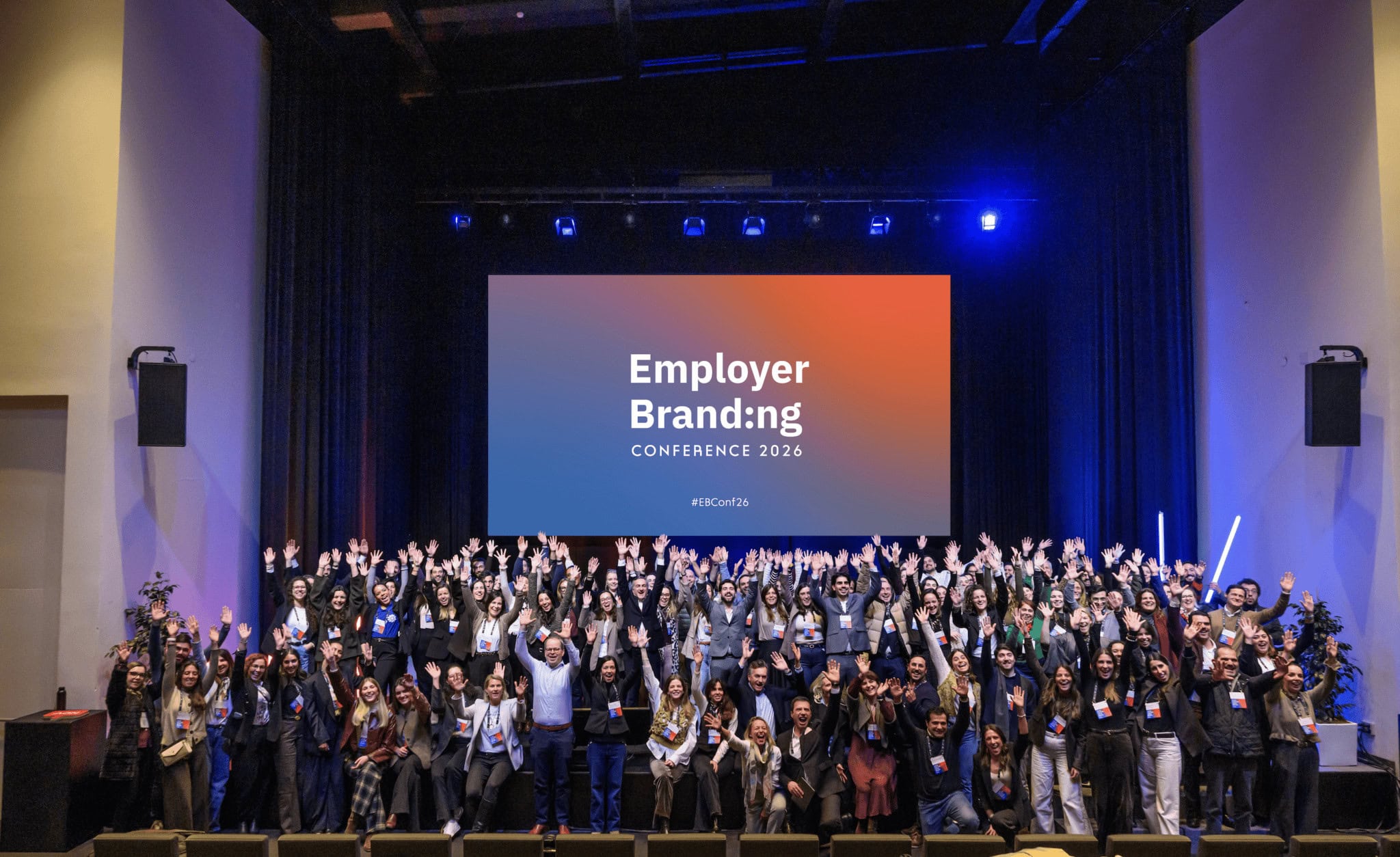
Organized annually, the Employer Branding Conference has run in 2017, 2019, 2020, 2024, 2025 and 2026, gathering more than 300 attendees, more than 100 companies from around the world and more than 30 speakers per edition.
The 2027 edition takes place on 1 and 2 February in Lisbon, with the first day dedicated to workshops and the second to the main conference.
This scale is precisely why preparation matters: with dozens of parallel conversations happening across two days, attendees who arrive with a plan extract measurably more value than those who arrive to see what happens.
Define your objectives before the event
The first step happens before registration is even confirmed. Attendees who get the most out of the conference tend to arrive with two or three specific objectives, rather than a general intention to “learn about employer branding.”
A Talent Acquisition Manager dealing with critical open roles will look for sourcing channels and competitive benchmarks. An Employer Branding lead at a scale-up will be looking for EVP frameworks and measurable examples. A People Director at a large company will prioritise reputation data and case studies she can bring back to leadership.
Writing these objectives down, even three bullet points, turns the full agenda from a list of sessions into a filter. It also makes it easier to identify, in advance, which speakers and sponsors are worth a direct conversation.
Choose your sessions strategically
The first day is dedicated to workshops in masterclass format, and the second to the main conference agenda. This structure is intentional: workshops allow for depth and practical application, while the conference day is built for breadth with case studies, panels and trends across multiple organisations and sectors.
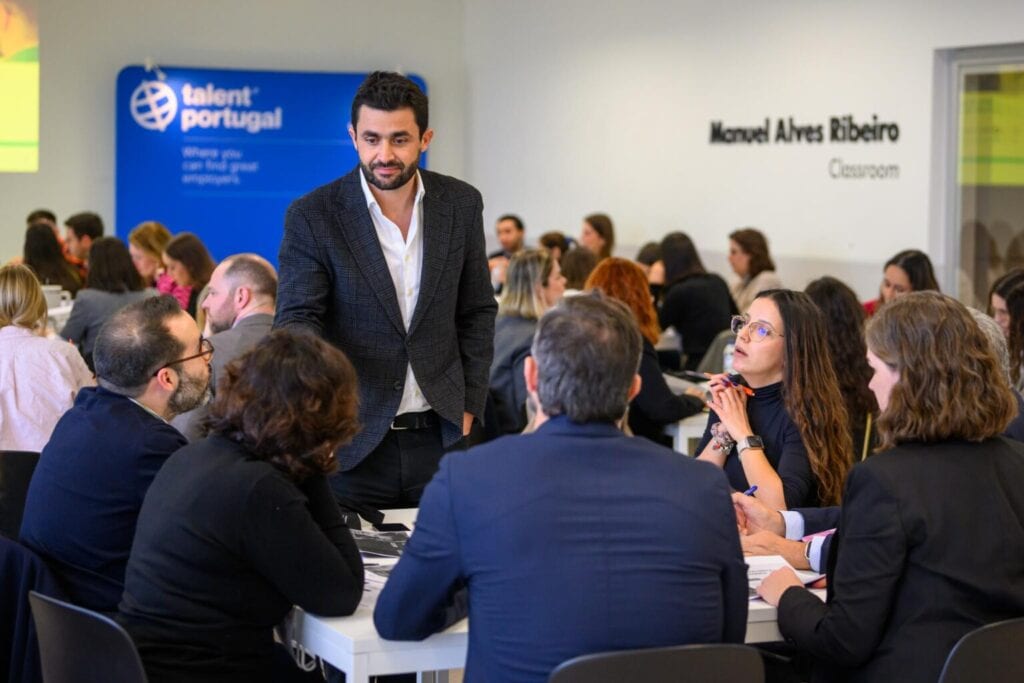
Reviewing the speaker line-up in advance helps attendees decide which workshop track matches their current priority – recruitment marketing, EVP construction, retention, or measurement – rather than choosing based on the room that happens to be least full.
Attendance across both days also unlocks a higher certification tier: 16 hours of certification for full participation, compared to 8 hours for the conference day alone, issued through the Certifier platform.
Prepare questions that get real answers
Generic questions get generic answers. “How do you approach employer branding?” invites a rehearsed response; “how did you measure the impact of your EVP relaunch in the first six months?” invites a real one.
The most useful preparation attendees can do is draft two or three specific questions per session, tied to the objectives set in step one, and bring them printed or noted on a phone rather than trusting memory in the room.
This is particularly relevant for anyone planning to approach a specific speaker or sponsor during breaks: a specific, well-framed question is also the fastest way to start a conversation that continues beyond the venue.
Plan your networking
Among the most consistent pieces of feedback in the conference reviews shared by past attendees is that the value of the event lies as much in the conversations between sessions as in the sessions themselves. With more than 300 professionals and 100 companies in the room, informal networking is not a side activity, it is where comparisons, referrals and follow-up projects actually start.
A few EB conference networking tips make this more deliberate:
- • Scan the attendee and sponsor list in advance, where available, and identify five to ten people worth a direct introduction.
- • Use the breaks between sessions, not just the evening events, since these are shorter and more focused.
- • Lead with the objective, not the company name – “I’m looking at how mid-size tech companies structure their EVP” opens a conversation faster than a generic introduction.
- • Follow up within 48 hours, while the context of the conversation is still specific enough to reference.
Talk to sponsors with intent
Sponsors at the Employer Branding Conference are not simply exhibitors; many are vendors, platforms and consultancies actively solving the same problems attendees face.
Approaching the sponsor area with a specific question about a tool, a methodology, or how a solution has performed with a company of similar size tends to produce far more useful conversations than a general walk-through of the stands.
For sponsors themselves, understanding what attendees are trying to solve is equally valuable, which is part of why the sponsorship track is built around direct interaction rather than passive branding.
Collect benchmarks you can bring home
One of the most tangible outputs of the conference is comparative data: how other organisations, of similar size or sector, are structuring their EVP, measuring retention, or allocating employer branding budget.
Attendees who take structured notes – company, sector, specific metric or practice – leave with a working benchmark document rather than a general impression.
This is the kind of material that People Directors in particular use to justify continued or increased investment in employer branding internally.
Speakers presenting case studies are, in most editions, professionals actively building the practices being described. Attendees considering whether their own results are worth sharing at a future edition can review the call for case studies and speakers, which remains open between editions.
Turn insights into action after the event
The conference produces value in the room, but it is only captured afterwards. The most effective attendees leave with three concrete follow-ups: one internal action to propose within two weeks, one benchmark to share with leadership, and one contact to follow up with directly.
Without this step, even a well-prepared two days risks becoming a set of interesting ideas that never reach implementation – the opposite of what a pragmatic, data-driven approach to employer branding is meant to achieve.
Ready for the next edition
The Employer Branding Conference brings together more than 300 attendees, over 100 companies and more than 30 speakers each year, across two days built specifically for workshops and cross-sector exchange. Attendees who arrive with clear objectives, a networking plan and a habit of turning conversations into benchmarks are the ones who bring the most value back to their organisations.