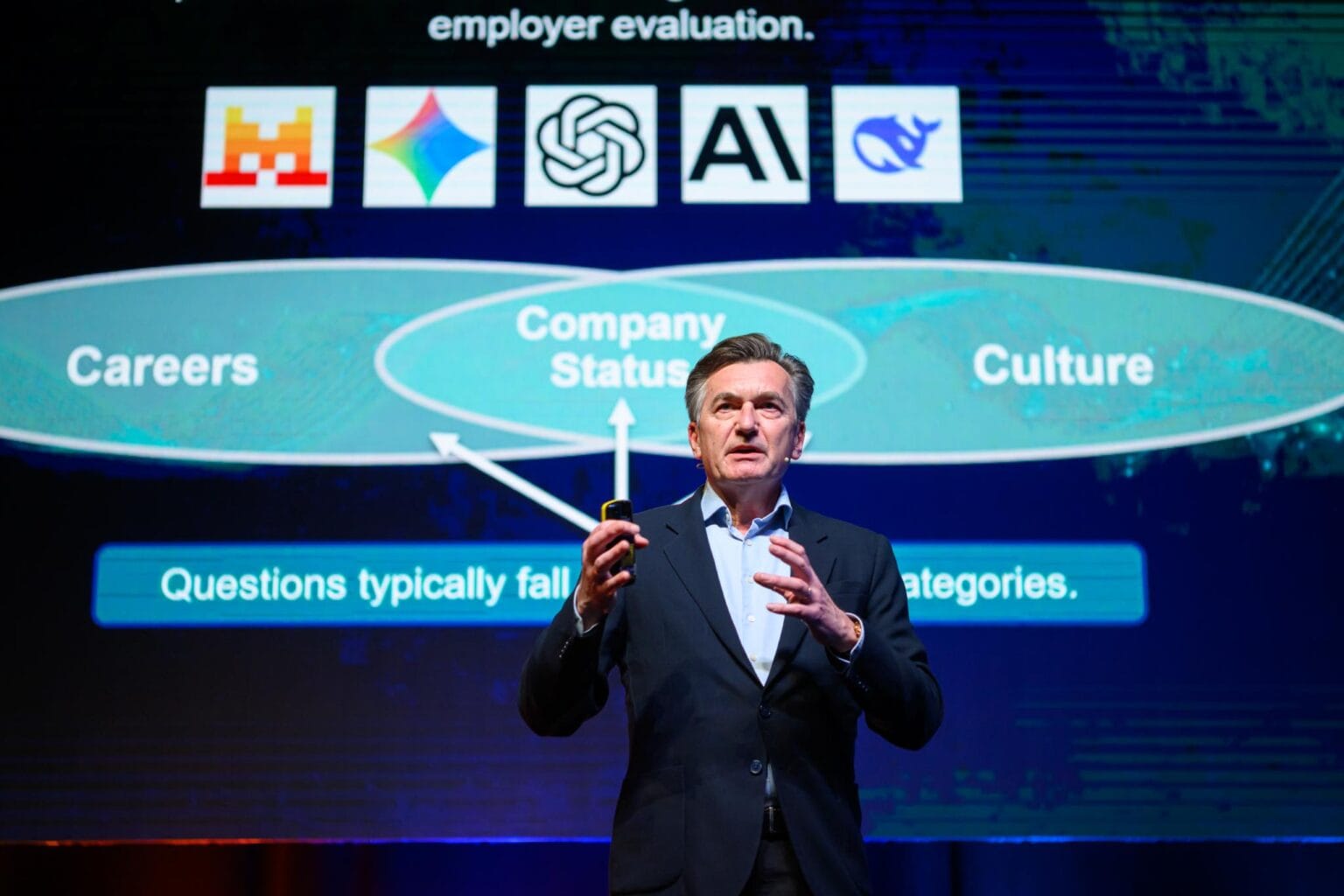


Leadership defines whether an employer brand is credible or cosmetic. A CEO who communicates consistently with what employees actually experience builds trust with talent. A brand led only by a marketing team struggles to convert reputation into applications. This is the gap that separates companies that attract talent from companies that simply talk about it.
Most founders and CEOs of growing SMEs already sense this.
They know their company has a story worth telling, but they are not sure whether that story should come from them, from HR, or from a campaign. The answer, as the data from the Portuguese market shows, is less about who writes the message and more about who stands behind it.
Why does leadership matter in employer branding?
Leadership matters because employer branding is a business decision, not a marketing campaign: candidates trust what leaders demonstrably do more than what communication teams announce on their behalf.
This is not a matter of opinion. It is a pattern that repeats across every industry we track.
When a CEO is visible, consistent and specific about what the company stands for, the employer brand becomes an asset that recruiters, employees and candidates all refer back to. When leadership is absent from the narrative, the employer brand becomes a set of claims with no owner easy to write, easy to ignore.
How does a CEO’s involvement shape employer brand credibility?
The first edition of the Employer Branding Report, with more than 230 participants, identified a clear pattern in the Portuguese market: employer branding has evolved and gained sophistication, but its maturity remains uneven across organisations. The companies furthest ahead were not necessarily the ones with the biggest marketing budgets. They were the ones where leadership treated employer branding as a strategic decision, not a design project handed down to communications.
This distinction matters for growing SMEs in particular. A founder-led company does not have the luxury of a distant, faceless brand – the leader is, whether intentional or not, already the face of the culture.
👉 The question is not whether the CEO shapes the employer brand. It is whether that shaping happens on purpose.
What doesn’t work and why
Three patterns consistently undermine employer brand credibility, according to what we observe across companies present on our platform:
- • Campaigns without leadership visibility. Culture videos and career pages that never feature a leader speaking in their own words read as marketing, not testimony.
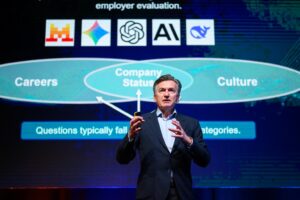
- • Reputation without benchmarking. Claiming to be a “great place to work” carries little weight without a reference point showing how that compares to other employers in the same sector.
- • Employer brand disconnected from business strategy. When retention, hiring plans and culture messaging are managed in separate silos, the story told externally rarely matches the experience described internally.
Talent Portugal’s approach to closing this gap rests on three tools rather than one message:
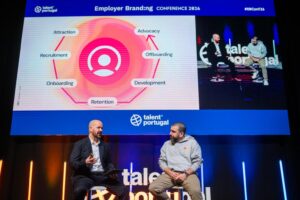
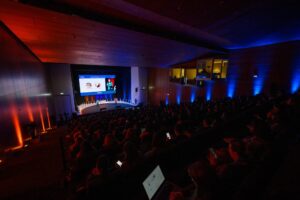
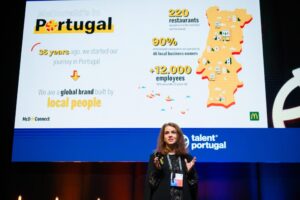
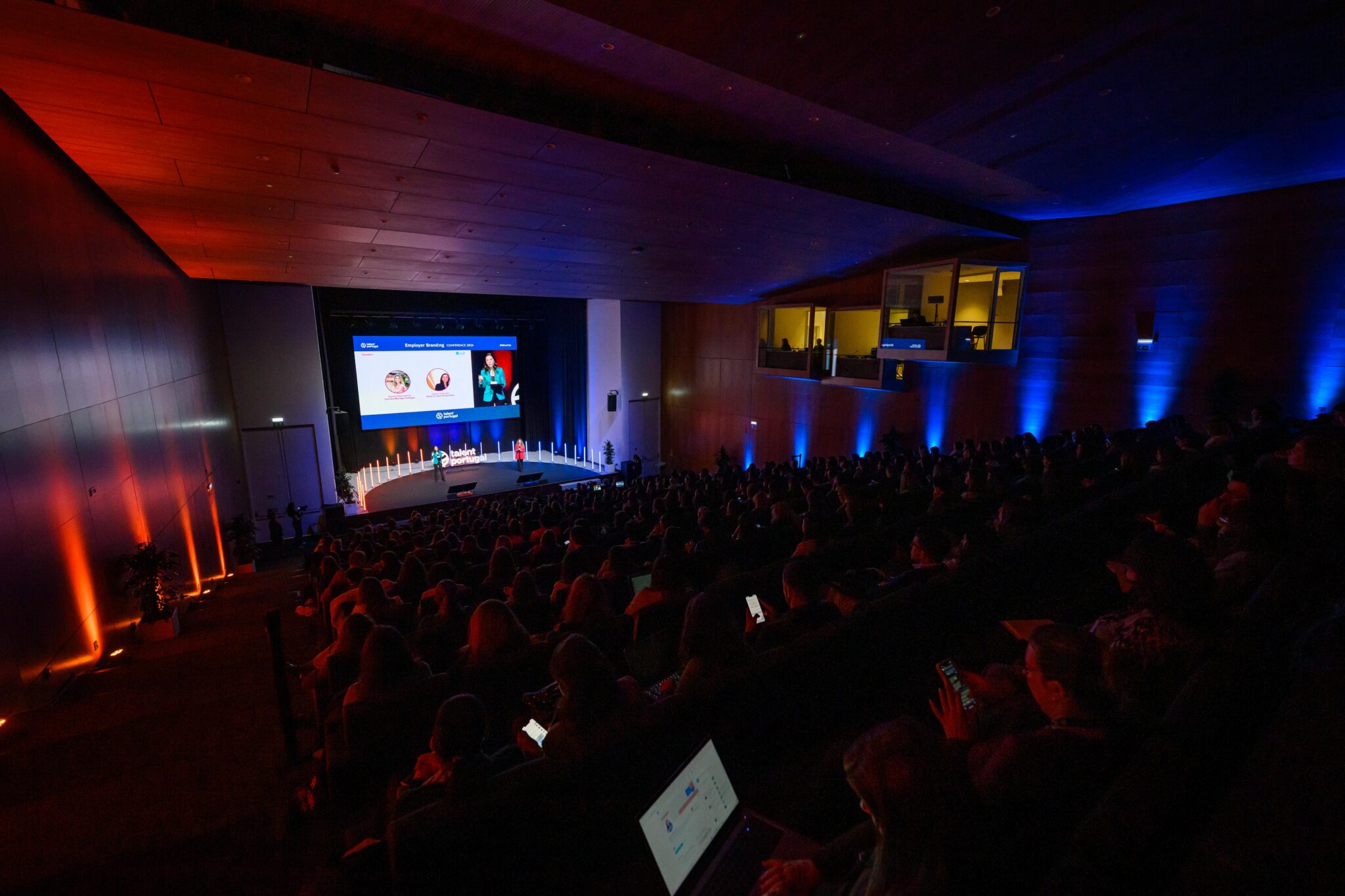
- 1. The Employer Branding Conference, where CEOs and senior leaders share real decisions and outcomes with more than 100 companies and 300 professionals in the room, moving the conversation from theory to practice.
- 2. The Employer Branding Academy, built with Universum Global, which gives leadership teams a structured EVP methodology instead of a one-off workshop.
- 3. The Employer Branding Report, which gives leaders a benchmark to measure their own maturity against the rest of the market.
Leadership and employer branding
Three ways to put your leadership behind your employer brand
Employer Branding Conference
100+ companies · 300+ attendees
CEOs and senior leaders share real decisions and outcomes, moving the conversation from theory to practice.
Explore the conference →Employer Branding Academy
Built with Universum Global
A structured EVP methodology for leadership teams — not a one-off workshop.
Explore the academy →Employer Branding Report
230+ participants · 1st edition
Benchmark data on market maturity, so leaders can measure their own progress against the rest of Portugal.
Explore the report →What should leaders actually do to build credibility?
Credibility is built through three consistent leadership behaviours: speaking publicly and specifically about culture decisions, aligning what is said externally with what is measured internally, and benchmarking progress against the market instead of assuming it.
None of these require a large team.
They require a leader willing to be visible, and a structure that turns that visibility into something measurable, which is precisely where most growing companies get stuck: they have the intent, but not the framework.
What does a CEO need to see resolved?
For a founder or CEO scaling a company, employer branding is rarely the first priority, until hiring becomes the bottleneck to growth. At that point, the question shifts from “how do we look” to “how do we compete for the same candidates as much larger employers.”
This is where leadership visibility becomes a genuine advantage rather than a nice-to-have: a growing SME can move faster and communicate more directly than a large corporation, but only if the leader is willing to be the one telling the story.
This is precisely the space where our Employer Branding hub for employers was built to give leadership teams a starting point, rather than a blank page.
What does this mean for your employer brand?
An employer brand without visible leadership behind it is a claim, not a reputation. For CEOs and founders building a company that needs to compete for talent, the most direct route to credibility is not a bigger campaign – it is standing behind the story publicly, backed by data that shows where the company actually stands.