

Employer branding has moved from a marketing footnote to a board agenda item because it now determines whether a growing company can hire, retain and scale at all. That is not a communications opinion it is what Talent Portugal sees every year across the Employer Branding Conference, the Great Employers project and the national Employer Branding Report.
For years, employer branding sat inside HR or marketing, treated as a nice-to-have layer on top of recruitment. That is no longer the case for companies raising capital, competing for scarce technical talent, or trying to scale a team from 30 to 300 people in eighteen months.
When hiring speed and retention become the bottleneck to growth, the board starts asking questions that used to belong to HR alone.
What changed to put employer branding on the board’s table?
Talent scarcity turned reputation into a financial variable: boards now treat employer branding as a lever for hiring cost, retention and even investor confidence, not as a design exercise for the careers page.
This shift shows up clearly in the data Talent Portugal collects from its own ecosystem.
👉 The first edition of the Employer Branding Report, in 2026, gathered more than 230 participants from Portuguese companies proof that this is no longer a niche concern for a handful of multinationals, but a shared question across sectors.
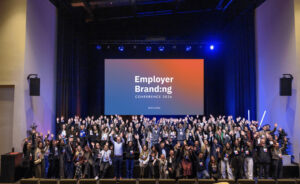
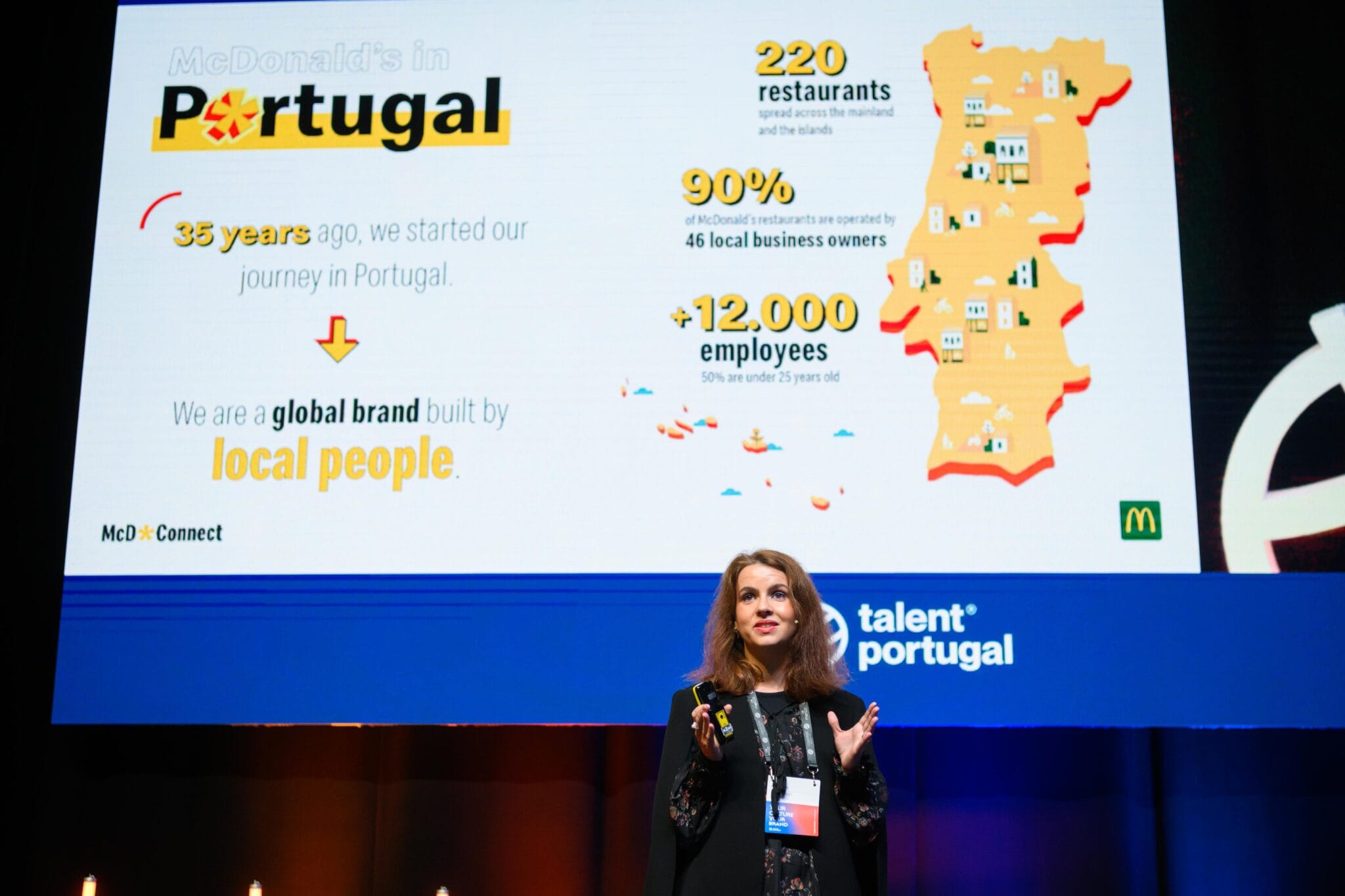
👉 At the same time, the Employer Branding Conference has grown from a regional gathering to an international forum with more than 300 attendees, 100 companies and 30 speakers per edition. Growth of that kind, sustained across six editions, does not happen around a topic that boards consider optional.
How does employer branding actually reach the boardroom?
The mechanism is simple, even if the conversation feels new. A scale-up opens a critical role, and it takes months to fill. A CFO starts asking why cost-per-hire keeps rising. A founder finds out, in a fundraising conversation, that investors are quietly checking employee reviews and public reputation as part of due diligence. None of these moments start as an “employer branding problem” they start as a growth problem, and employer branding turns out to be the answer underneath it.
This is precisely the pattern that companies present on the Great Employers platform describe: reputation stops being abstract the moment it shows up as a number the board already tracks – time-to-hire, offer-acceptance rate, voluntary turnover.
Employer branding, done properly, is the discipline that moves those numbers in the right direction.
What doesn’t work and why growing companies get this wrong
Founders scaling fast tend to fall into three traps, all avoidable once the problem is named correctly:
- • Treating employer branding as a campaign, not a system. A careers video or a one-off social push creates a spike in applications, not a durable reputation. The companies with the strongest EVP, from the ones featured in the Great Employers project, treat it as continuous work, updated every year with real testimonials and real data, not a project with an end date.
- • Outsourcing reputation entirely to an agency. “We already have a communications agency” is the most common hesitation Talent Portugal hears from leadership teams, and it misses the point: an agency can polish the message, but it cannot manufacture the internal consistency between what a company says and what employees actually experience. That consistency is the part boards eventually notice.
- • Measuring the wrong things. Followers and impressions look reassuring in a slide deck, but they say nothing about whether the company hires faster or keeps people longer. The companies benchmarked in the Employer Branding Report track applications, retention and internal advocacy the metrics that connect employer branding back to business outcomes a board actually cares about.
Does employer branding actually affect a company’s ability to raise capital or scale?
Yes, employer branding increasingly signals organisational maturity, and investors read a company’s employer reputation as a proxy for execution risk and leadership quality, particularly at the scale-up stage.
For a founder or CEO of a growing company, this is the part that changes the calculation. A strong, well-documented EVP is evidence that the leadership team can build process, not just product that hiring, onboarding and retention are handled with the same rigour as sales or engineering.
That is exactly the kind of signal that shows up in the case studies shared at the Employer Branding Conference, where founders and people leaders present, side by side, what building that consistency actually took.
What should a growing company’s CEO do next?
The founders who move fastest on this treat employer branding the same way they treat any other growth lever: they benchmark against peers, they bring their own data into a room where it gets challenged, and they commit to one visible action rather than a vague intention.
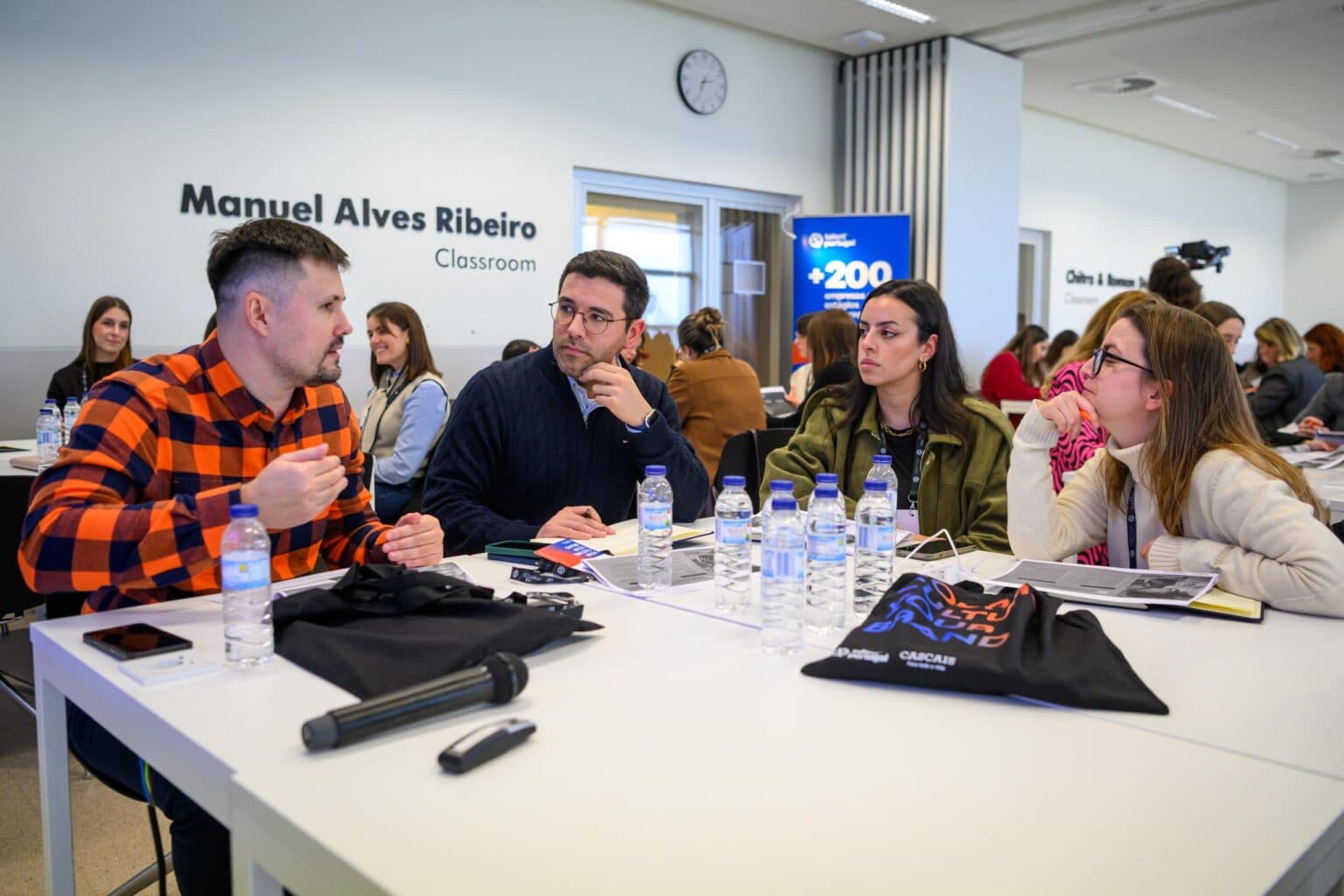
That is the specific gap the Employer Branding Conference exists to close. Two days, one dedicated to workshops and one to the main conference, built for leadership teams, not just HR, to walk out with a structured EVP approach rather than another set of slides nobody implements.
Companies that have been through the exercise before typically arrive already knowing they want to share their case study or apply as a speaker, and use the stage to pressure-test what they built internally.
The bottom line
Employer branding stopped being a communications topic the moment it started affecting how fast a company hires, how long people stay, and how investors read its leadership. Boards that ignore it are not avoiding a soft issue, they are ignoring a growth constraint with a name.
The Employer Branding Conference 2027 takes place on 1 and 2 February, in Lisbon, and brings together the companies, people leaders and founders already treating this as board-level work.
If your team is scaling and this conversation is already happening in your boardroom, secure your seat at the Employer Branding Conference before it does.