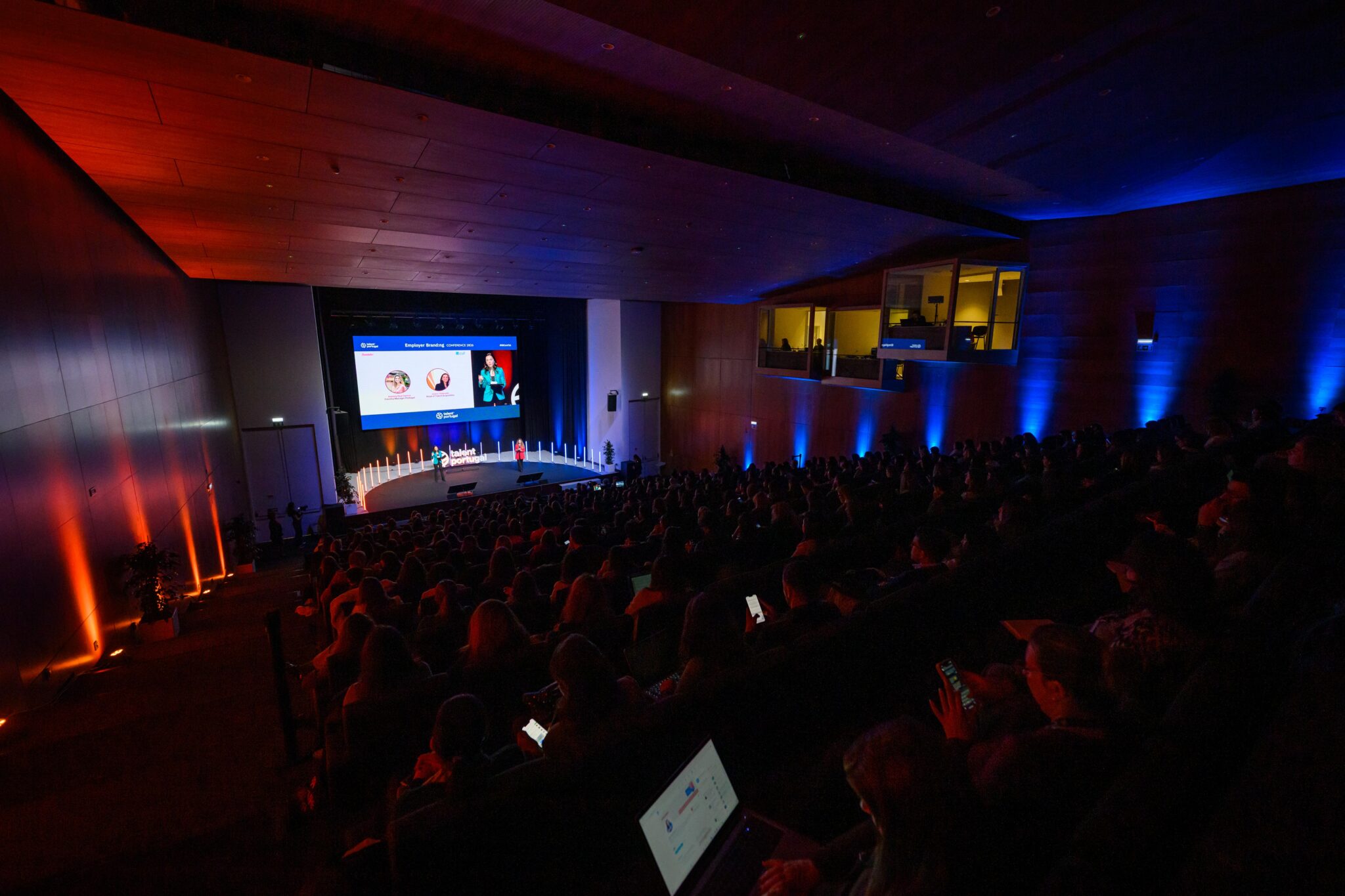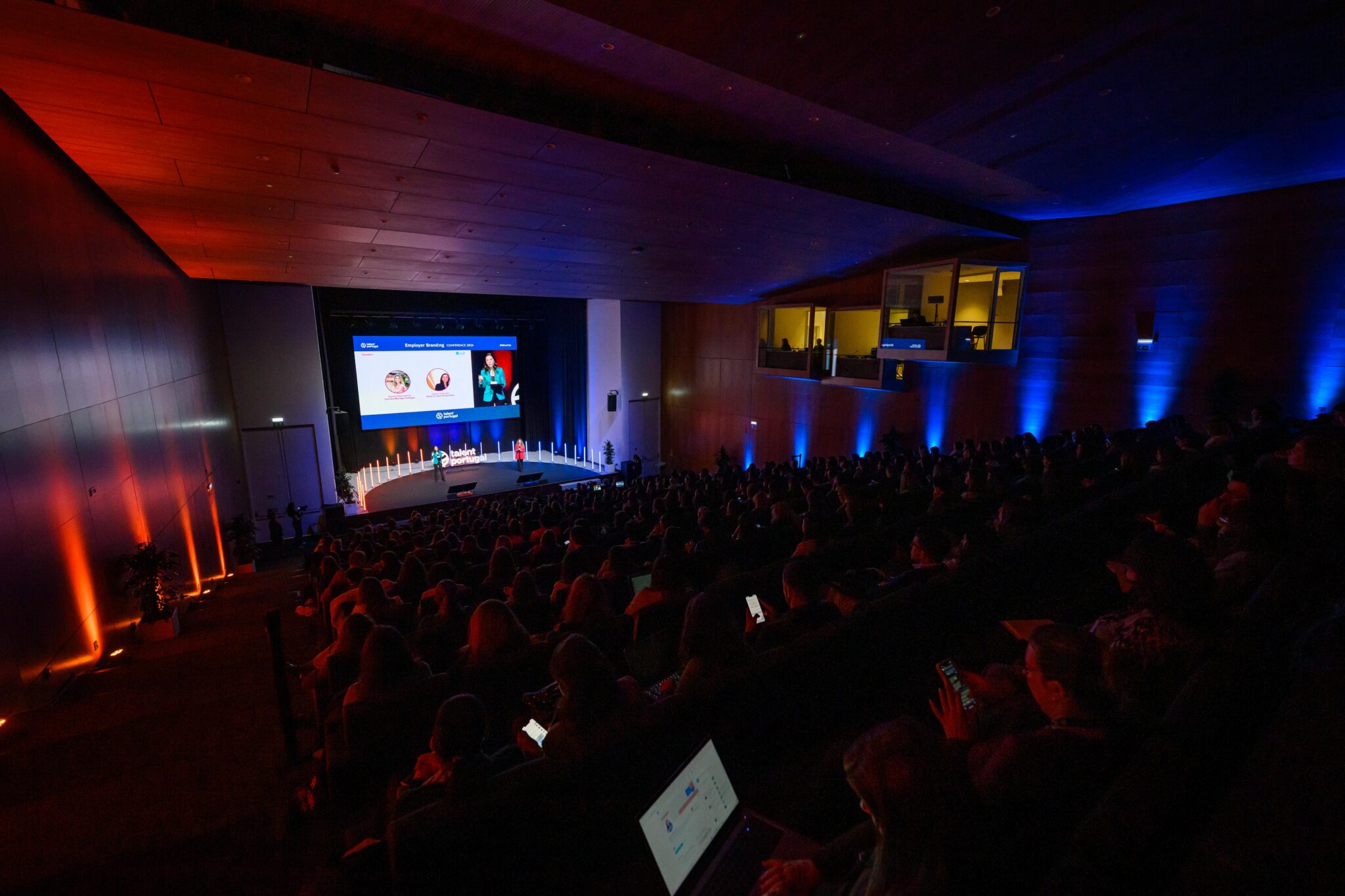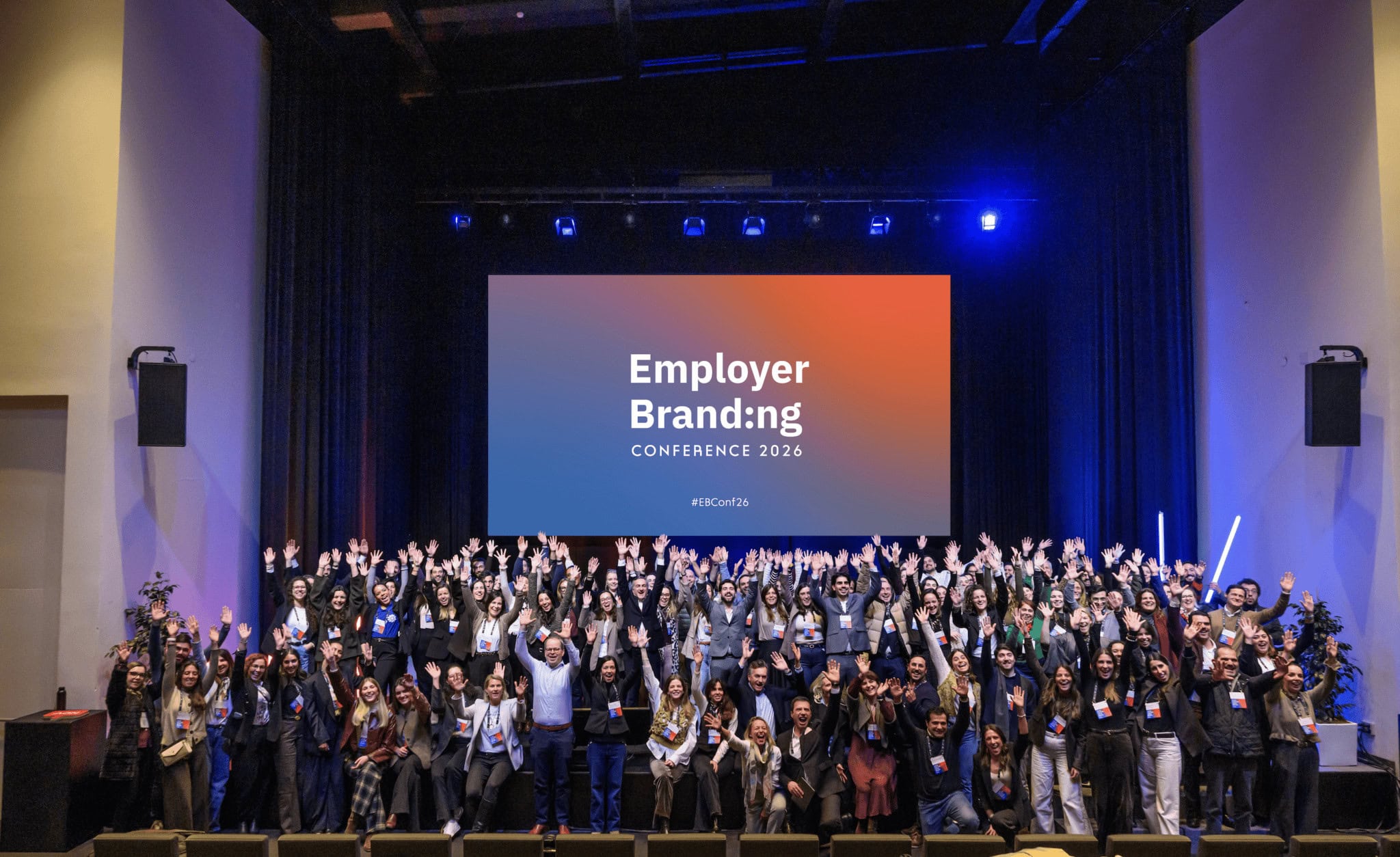

Employer branding fails when it leans on only one of its two legs. Data proves that a company’s promise is true; storytelling explains why it matters. We have watched this pattern play out across five editions of the Employer Branding Conference, where more than 300 professionals and 100 companies compare what actually moves candidates and what merely decorates a careers page.
What happens when employer branding relies only on data?
Data-only employer branding produces credible but forgettable content: accurate numbers with no reason for anyone to remember them. Retention rates and survey scores confirm that something works, but they rarely explain why a candidate should care.
We see this constantly in the companies that go through Talent Portugal’s Great Employers. A page built entirely from metrics – turnover percentages, average tenure, training hours – reads like an internal report, not an invitation. It’s not that the numbers are wrong.
It’s that a number alone doesn’t tell a candidate what it feels like to work there on a Tuesday afternoon.
How do data and storytelling actually work together?
Storytelling gives a number its human weight, and data gives a story its proof. One without the other collapses: pure narrative feels invented, pure metrics feel cold.
This is the mechanism behind every strong employer brand case we’ve collected. A company doesn’t just say “we grew faster than planned” – it shows the decision that caused it, the team that absorbed it, and the person who lived through it.
Airbus GBS in Portugal is a clear example: the company didn’t just report that it exceeded its 2024 hiring target of 800 by reaching over 1,000 hires. Juliana Souza, Head of Recruitment, explained the mechanism behind that number expanded recruitment teams, new university partnerships, a trainee agenda built specifically to sustain future hiring needs. The story gives the statistic a cause.
👉 Read the full case at Airbus: build the plane as it lands.
This is also the logic behind the annual Employer Branding Report, which gathered more than 230 participants in its first edition in 2026. The report doesn’t stop at percentages it pairs each finding with the practical decisions companies are making in response, because a statistic without a decision attached to it rarely changes anyone’s behaviour.
Which data points matter most for a data-plus-storytelling approach?
The data that changes minds is the data tied to a specific decision such as a hiring target adjusted, a team restructured, a agenda created, not a data point floating on its own.
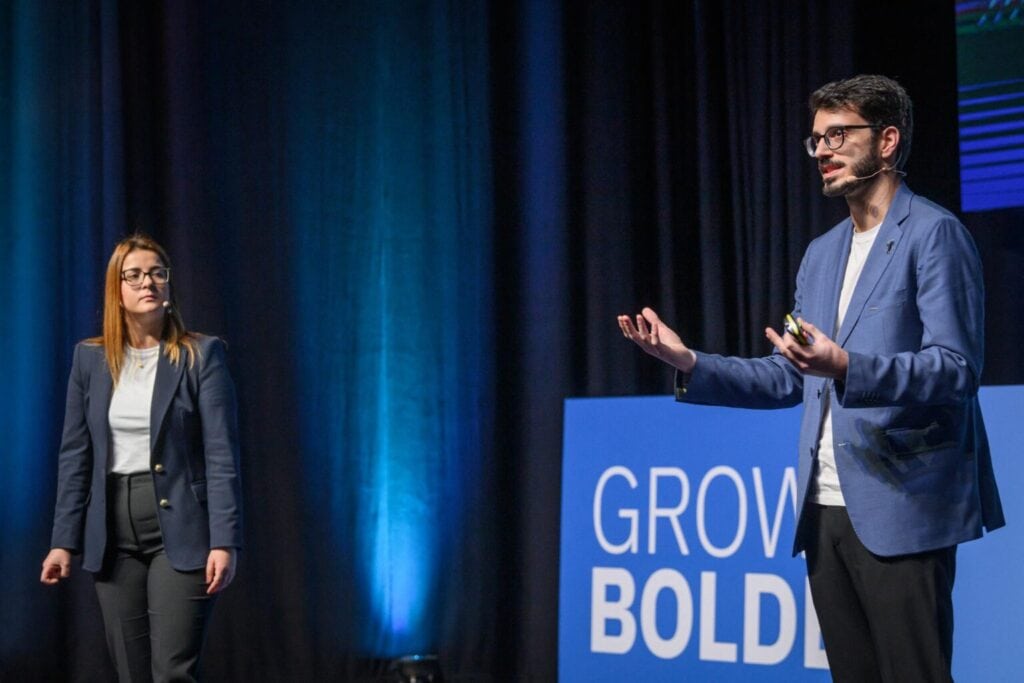
At each edition of the Employer Branding Conference, this is the recurring theme in the case studies presented on stage.
Companies that stand out don’t bring the largest spreadsheets; they bring the smallest number attached to the clearest decision. A recruitment team that grew by a specific percentage because of a specific partnership. A trainee agenda created for a specific gap.
What should an HR or employer branding lead take from this?
For a Talent Acquisition Manager or Employer Branding lead preparing next year’s content plan, the practical takeaway is sequencing, not balance for its own sake: start every claim with the decision behind it, then attach the number that proves it happened, then let a person describe what it changed for them.
Employer branding that skips any one of those three steps is easier to write and far easier to ignore.
Consistency between recruitment and internal culture, structured EVP frameworks, and case studies with named people and real figures aren’t optional extras. They’re what separates an employer brand candidates remember from one they scroll past.
So what’s the bottom line?
Employer branding built on data alone is credible but silent, but built on storytelling alone, it’s warm but unverifiable. The two only work as a pair.
If your employer branding still leans on one leg all metrics, or all narrative the fastest way to fix that pairing is to see it done well, case by case.
That’s exactly what the Employer Branding Conference is built around: companies presenting the decision, the number and the person behind each result, side by side.