
A great employer branding conference case study connects a specific business challenge to a measurable talent outcome and shows the strategy that got there, not just the result. It needs a real problem, a documented activation, and numbers that another company can actually learn from.
👉 A case study earns its place on stage when someone in the room can hear the challenge and think, that’s exactly what we’re dealing with right now.
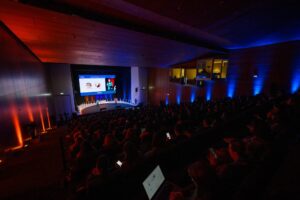
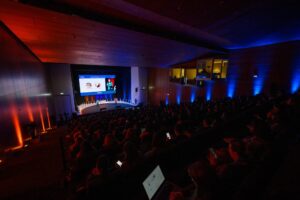
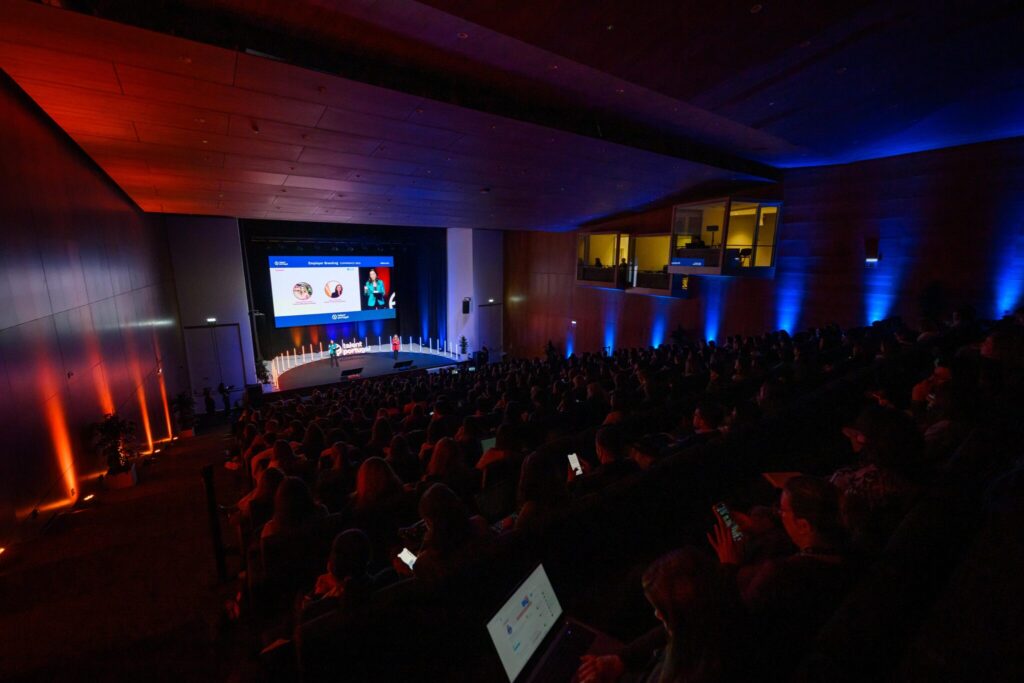
For the Employer Branding Conference, we’ve reviewed and curated employer branding case studies since its first edition in 2017. Each edition brings together more than 300 participants, over 100 companies and more than 30 speakers sharing what actually worked, and what didn’t, in their talent attraction strategy.
An employer branding case study is a structured account of how a company solved a specific talent attraction or retention problem, documenting the strategy, the activation and the measurable business result.
The word “evidence” is doing real work there. A case study without a baseline, a timeline and a result is a testimonial with better formatting.
Companies presenting at the Employer Branding Conference are asked, deliberately, to walk through five things in sequence: the business challenge that triggered the project, the internal or market context that shaped it, the strategy chosen and why, how it was activated across channels, and the results, followed by the lessons learned that another employer branding manager could actually apply.
The five steps of a strong case study
-
01
Business challenge
The specific problem that triggered the project — not a goal, a real challenge.
-
02
Context
The internal or market situation that shaped why this challenge mattered now.
-
03
Strategy
The approach chosen to answer that exact challenge, and why that one over another.
-
04
Activation
How the strategy was activated across channels, timeline and internal alignment.
-
05
Results and lessons learned
The measurable outcome, plus the takeaway another employer branding manager can apply.
The evidence
This structure isn’t arbitrary. It mirrors how professionals in the room actually process information: they want to know if the problem looks like theirs before they invest attention in the solution.
How does a strong employer branding conference case study take shape?
It starts with a business challenge, not a marketing idea. Too many submissions open with “we wanted to improve our employer brand” which is a goal, not a problem. A strong case study opens with something sharper: rising attrition in a specific team, a candidate drop-off rate at a particular stage, a scale-up struggling to hire for a role the market doesn’t understand yet.
From there, the strategy has to answer that exact problem.
If the challenge was candidate drop-off during interviews, the strategy should be about interview experience, not about a new careers page design. This is where a lot of otherwise strong employer branding work gets lost in translation – the activation is well executed, but the case study doesn’t connect it back to the original challenge, so the audience can’t judge whether it actually worked for the stated reason.
Then comes activation: the channels, the timeline, the internal alignment required to make it happen. And finally, results expressed as numbers wherever possible. Time-to-hire, offer-acceptance rate, employee referral volume, retention at 12 months.
Case studies presented at the Employer Branding Conference that include even one hard number consistently generate more follow-up conversation from the audience than those built entirely on qualitative description.
Three cases we’ve hosted show what this looks like when it’s done well.
👉 Urban Sports Club, presented at the 2024 edition, anchored its case study in a concrete cost: workplace stress alone costs Portuguese companies more than 5.5€ billion a year, and its “Netflix of sport” subscription model – over 800 partner venues and 50+ modalities across Portugal – was framed as the direct answer to that number, not just as a wellness perk.
👉 MC Sonae, the employer brand behind roughly 40,000 employees, built its 2025 case study around a specific internal challenge: getting people across dozens of retail insignias to recognise themselves in one identity, solved by shifting the brand’s social presence toward Instagram and TikTok and putting real employees, not corporate messaging, at the centre of every post.
👉 Noesis, in the 2024 edition, tied its EVP “Let’s innovate together” to the sharpest problem in Portuguese tech right now retention in a market defined by constant turnover and addressed it through five structured People pillars and an internal learning platform, the Noesis Academy.
All three follow the same pattern: a named problem first, a specific mechanism second.
Why do companies present case studies at the Employer Branding Conference?
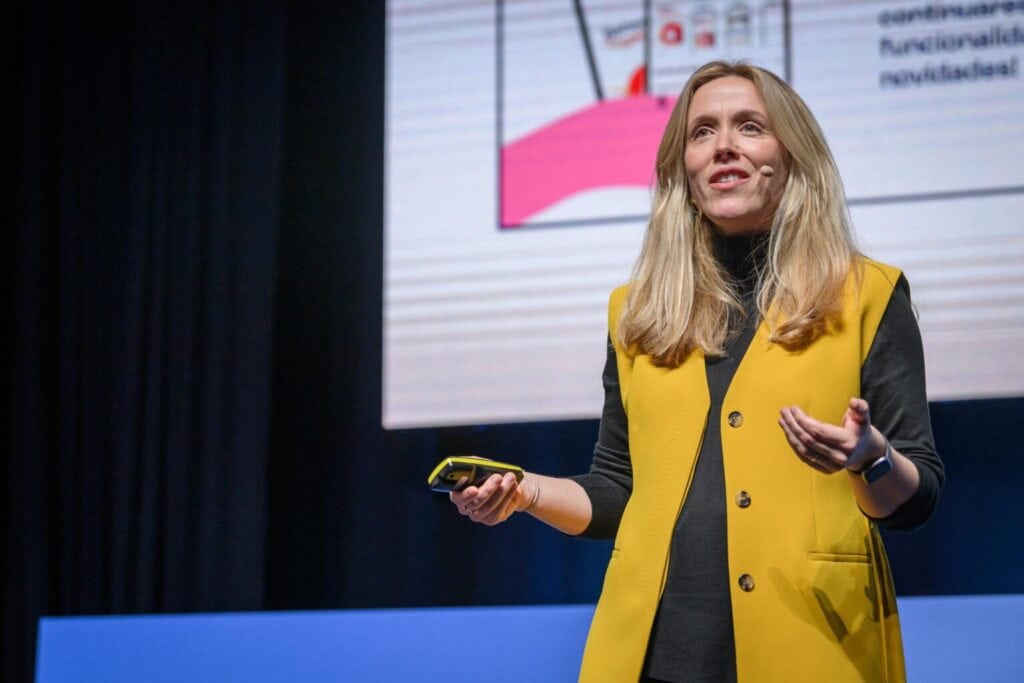
Companies present case studies at the Employer Branding Conference to build credibility with peers, attract talent through public proof of their EVP in action, and get structured feedback from a room of employer branding practitioners.
For a Responsible for Employer Branding working inside a scale-up, this is often the fastest route to internal validation too. It’s one thing to tell leadership that an EVP initiative worked; it’s another to present it publicly, in front of more than 100 companies, and have it hold up.
There’s also a compounding advantage that’s easy to underestimate: once a case study is presented, it becomes reference material. Other companies in the audience benchmark against it, journalists and industry commentators cite it, and it becomes part of the company’s own employer brand narrative going forward.
What should a busy employer branding manager look for before submitting?
If you’re the person responsible for employer branding inside your company, the honest question isn’t “is our work good enough.” It’s “do we have the documentation to prove it.” Most companies underestimate how much of the case study groundwork already exists inside performance dashboards, recruiter notes, internal surveys and overestimate how much new work is needed to package it properly.
Start with the number you’re proudest of, then work backwards to the challenge it solved. If you can’t name the specific problem that number answers, that’s the gap to close before submitting, not a reason to wait for a bigger result.