

An authentic employer brand is built when a company’s Employee Value Proposition (EVP) is validated by real employee experience, not just written into a careers page. Companies that get this right treat EVP as a hypothesis to be tested internally, then use that evidence, not adjectives, to communicate externally.
Most EVP statements are written in a workshop, approved by leadership, translated into a tagline, and then left to survive contact with the actual employee experience, onboarding, management, day-to-day friction. When the two don’t match, candidates notice long before HR does.
This is the gap this article is about: what separates an EVP that stays a slide from an EVP that becomes a credible, external employer brand.
What is the difference between EVP and employee experience?
The EVP is the promise a company makes to employees; employee experience is whether that promise is kept, day to day, from the first interview to the exit conversation.
👉 An EVP is strategic and, by definition, aspirational – it describes what a company wants to be known for as an employer: growth, flexibility, purpose, stability.
👉 Employee experience is operational: it’s what actually happens when someone joins, works a difficult quarter, asks for a promotion, or leaves.
Employer branding sits between the two. Its job isn’t to invent the promise; it’s to make sure the promise and the lived experience are close enough that communicating one doesn’t expose the other.
Why do so many EVPs fail to translate into real employee experience?
Most EVPs fail because they are designed and approved without ever being tested against the experience they claim to describe and because the employer branding team rarely has the mandate to influence the practices that would make the promise true.
In practice, this shows up in three recurring patterns.
1. First, the EVP is written by communications or leadership, with HR consulted late and operations not at all so it reflects aspiration, not evidence.
2. Second, employer branding is treated as a campaign function, measured by content output rather than by alignment with retention, internal mobility or manager quality.
3. Third, there is no external benchmark: without visibility into what comparable companies are actually doing and what candidates are actually comparing them against. It’s difficult to know whether an EVP is credible or simply generic.
What doesn’t work and why
Generic culture statements, unverified superlatives and campaigns with no operational backing are the three most common ways companies erode trust in their employer brand, instead of building it.
• Unverified superlatives. Claims like “best place to work” or “people-first culture” without a visible, checkable source behind them read as marketing, not evidence and candidates increasingly cross-reference employer claims against public information before applying.
• Employer branding without internal alignment. Content and campaigns produced without input from the teams responsible for the actual day-to-day experience tend to create a promise the organisation can’t keep at scale, which surfaces in reviews and referrals.
• No external benchmark. Without a comparison point how does this EVP hold up against peer companies in the same sector or talent pool there’s no way to know whether a proposition is genuinely differentiated or simply repeating what every competitor already says.
This is precisely the gap the Employer Branding Report was designed to close: its first edition gathered input from more than 230 professionals to produce a first structured reading of where employer branding maturity in Portugal actually stands, rather than where companies believe it stands.
How can companies measure whether their EVP matches employee experience?
The most reliable signal isn’t an internal survey score it’s whether the company is willing to present its EVP publicly, next to peers, and defend it with evidence rather than adjectives.
Internal listening (engagement data, exit interviews, manager feedback) tells a company what its own employees experience. But maturity shows when that internal picture is tested externally against sector peers, against candidate perception, against what actually gets cited in case studies at events built specifically for that comparison.
Companies that treat external scrutiny as validation, not risk, are consistently the ones with the most durable employer brands.
What should employer branding teams do next?
Teams that want their EVP to become a real employer brand need a structured way to test it against peers, present it with evidence, and hear how a wider talent-attraction community reacts to it.
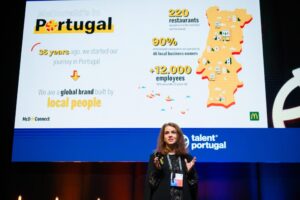
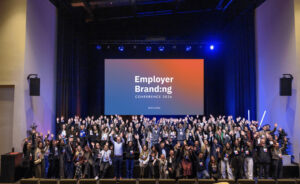
This is the logic behind the Employer Branding Conference, which each year brings together more than 300 professionals, over 100 companies and more than 30 speakers to discuss what is actually working in employer branding and talent attraction, not in theory, but in practice, through case studies presented by the companies living them.

It is also the reasoning behind Great Employers, the platform where more than 200 companies choose to make their EVP checkable – culture, benefits, offices, employee testimonials – rather than simply stated.
If an EVP has already been tested internally and produced measurable results, it deserves an external stage.
Turning that internal case into a public one comparable, benchmarked, and discussed by peers is what makes an employer brand authoritative rather than aspirational.